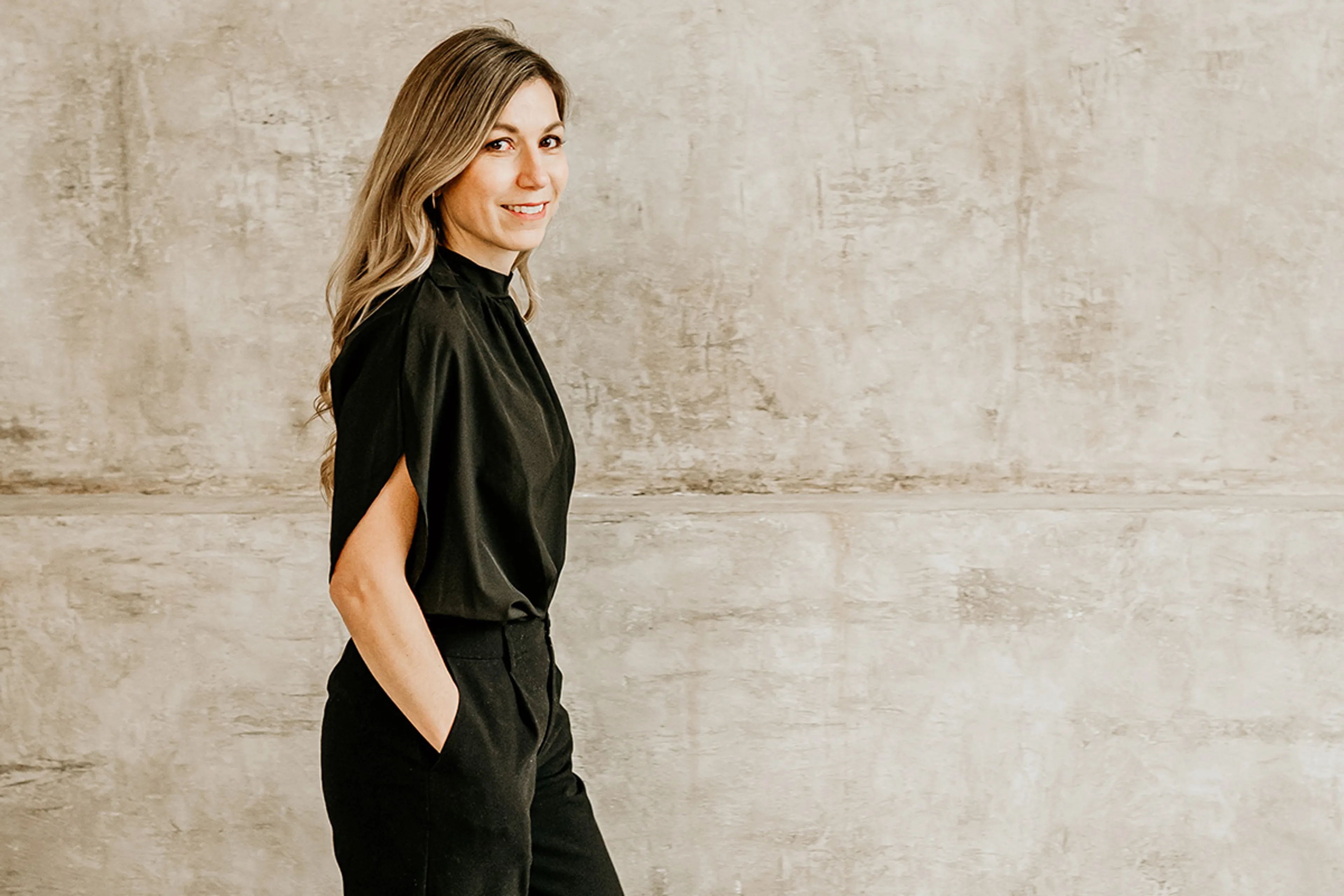
Renovating historic apartment buildings is one of the most demanding disciplines – and at the same time a key part of our portfolio. Many of our projects are designed by the team at JKH Atelier, led by architect Jana Klečková, who has completed more than twenty full restorations of historic buildings. In this interview, she explains why every house is different, where the complexity of renovations becomes most evident in practice, and how history can be meaningfully connected with the needs of modern living.
How did your collaboration with PSN begin, and what makes the renovation of apartment buildings interesting for you?
Most of our clients come to us through recommendations. PSN approached us with the first project – a design for the common areas of one of their buildings. Over time, the collaboration naturally expanded, and today we are preparing several full-scale renovations for PSN, both in Prague and newly in Brno.
Renovating apartment buildings is deeply inspiring for us. Every building is unique – architecturally, materially, and technically. We have completed more than twenty full renovations, and each one has brought a new surprise. In a renovation, you never know what will emerge: hidden structures, original elements, historical alterations… The process is dynamic and requires quick, thoughtful responses. That is what makes the work so enriching.
What do you consider the key to a successful long-term partnership between architect and investor?
For me, the foundation is mutual trust and work delivered with high quality and on time. When the investor knows they can rely on the architect, the collaboration is effective and can grow over the long term.
How would you describe your overall approach to renovating historic apartment buildings?
At JKH Atelier, we build on respect for history and on the sensitive integration of contemporary architecture and modern design. Every renovation is unique and cannot be fully standardized. However, we always strive to preserve valuable elements and to approach the entire building with care. Our aim is to connect tradition with modern living.
How do you blend the historic value of a building with the requirements of contemporary housing?
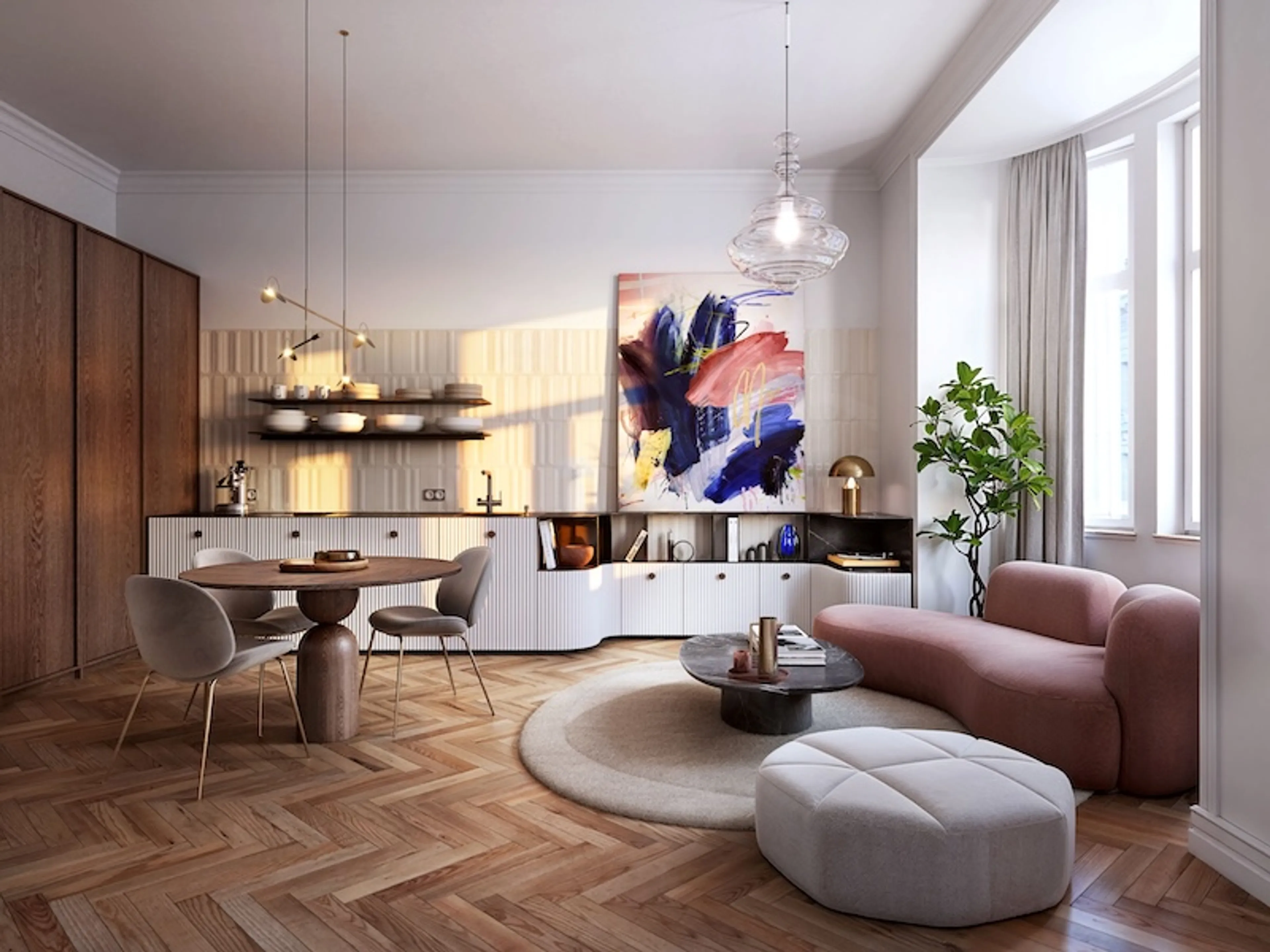
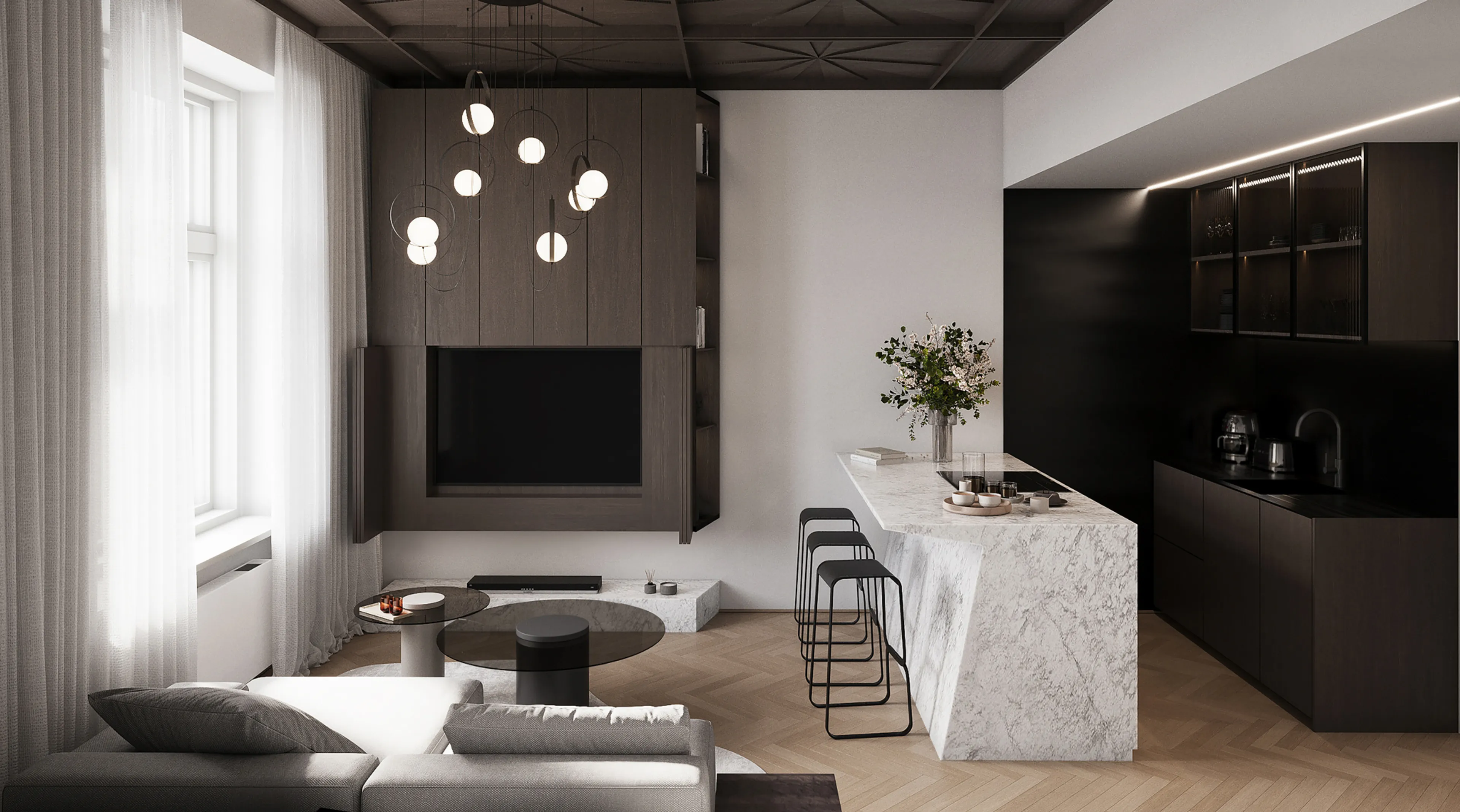
The needs of today’s residents differ greatly from the time when these buildings were constructed. Reconfiguring layouts therefore plays an important role – many apartments have very small bathrooms, sometimes even located outside the unit. Modern living requires comfortable sanitary facilities and logical, functional layouts.
We perceive historic value mainly in preserved details: solid oak parquet flooring, profiled interior doors, or stucco ceilings. Whenever possible, we keep these elements, and they often become the cornerstone of the design.
What is the biggest challenge when working with an existing building structure?
The biggest challenge is unpredictability. You never know the condition of the structures or utilities, what interventions were made in the past, or whether they comply with today’s standards. Renovation requires a high degree of flexibility, quick decision-making, and close cooperation with engineers and the construction team. Which PSN projects have you worked on in recent years?
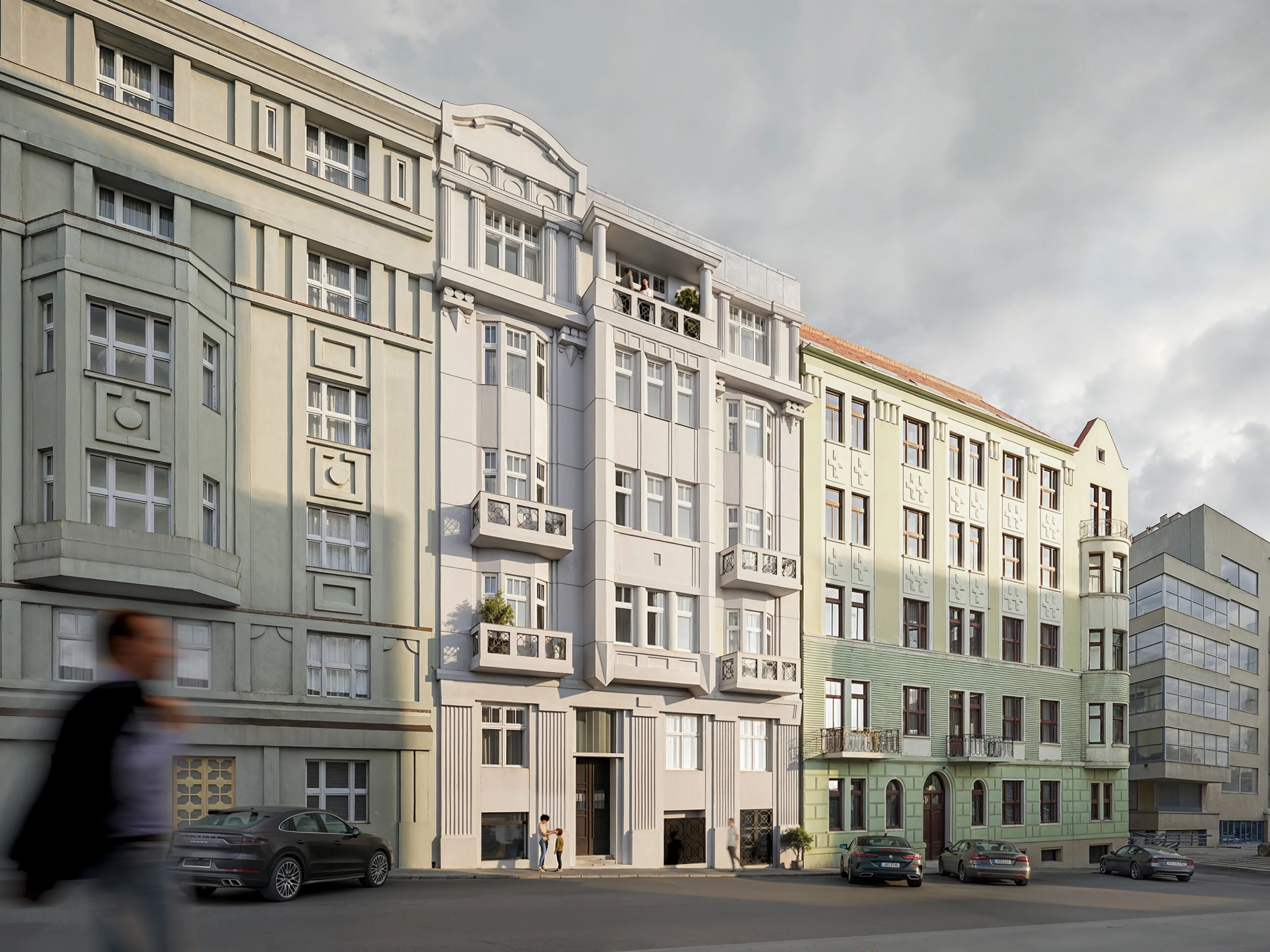
Last year, we completed the full renovation of Vinohradská 160, which received the Expert Jury Award in the Real Estate Project of the Year competition. This year, the project Jeseniova 93 in Žižkov was completed, and currently we are working on the renovations of Pecháčkova 6 and Bělehradská 29, both of which include attic extensions. From the upcoming projects, I can mention Jeruzalémská 4 – a beautiful building directly opposite the Old Synagogue, where several premium apartments will be created – as well as Heřmanova 24 in Holešovice.
Which of your projects has been the most demanding, and why?
I believe the most demanding project is still ahead of us. It is a magnificent corner apartment building directly opposite the church at Strassmayerovo Square, which will undergo a full renovation including a large attic extension.
Is there a project that is closest to your heart? What makes it special?
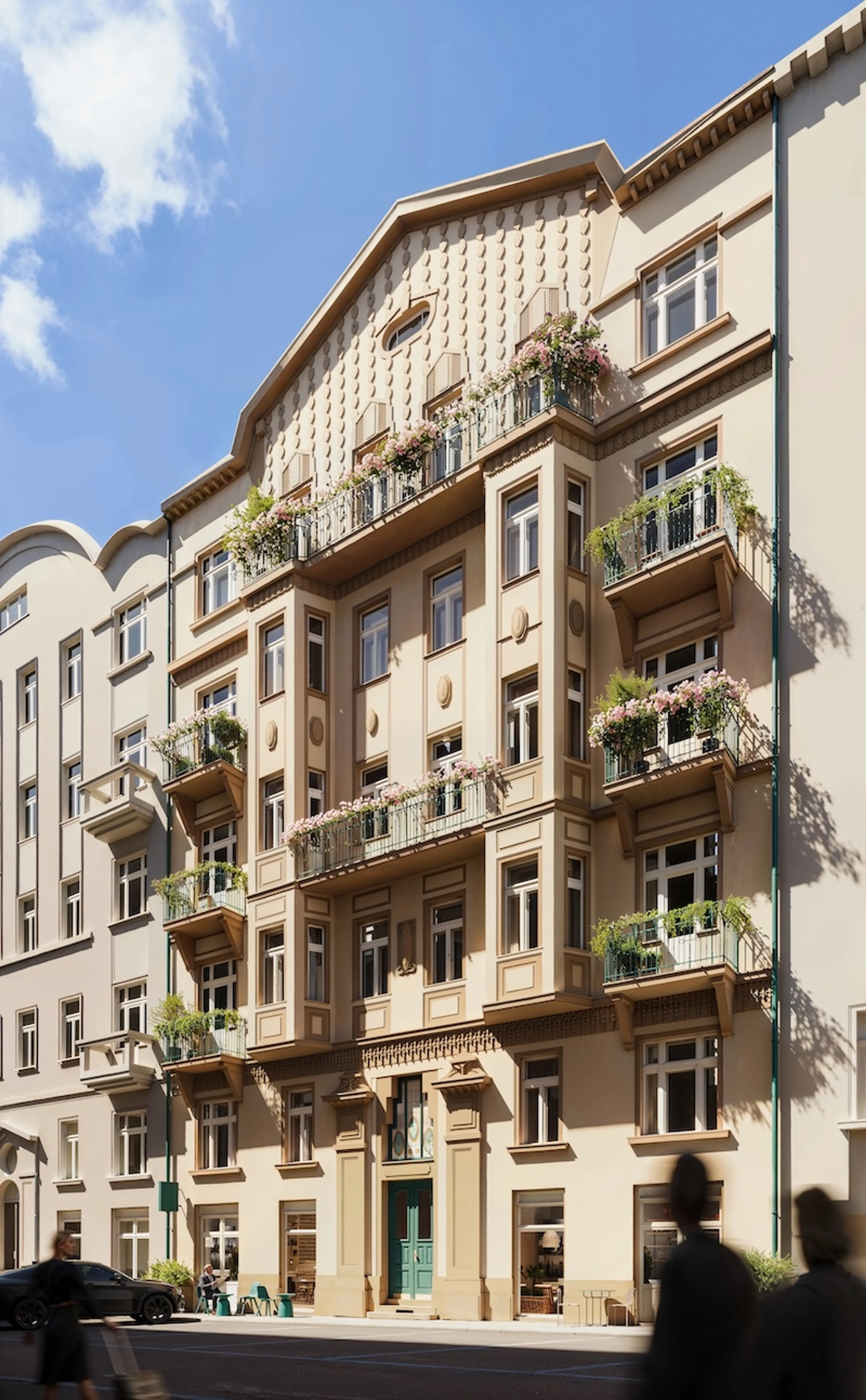
Pecháčkova 6 in Prague 5 is very dear to me. It is an early 20th-century apartment building with a distinctive charm. Already on the first visit, we were captivated by the details, the ceilings, and the original atmosphere of the house. We immediately began thinking about how to best bring out its potential. I believe we succeeded in truly “bringing the house to life,” as you also say in your company motto.
If you were to highlight one element that captures your signature style, what would it be?
In renovations, our signature does not manifest as uniformly as in new construction – each building is unique. We always try to design elements and details that respect the historic context while connecting them with modern design and contemporary living. Our characteristic approach lies more in the combination of sensitivity, originality, and individual work with each building.
How do you work with the visual identity of a building – its façade, common areas, and distinctive elements?
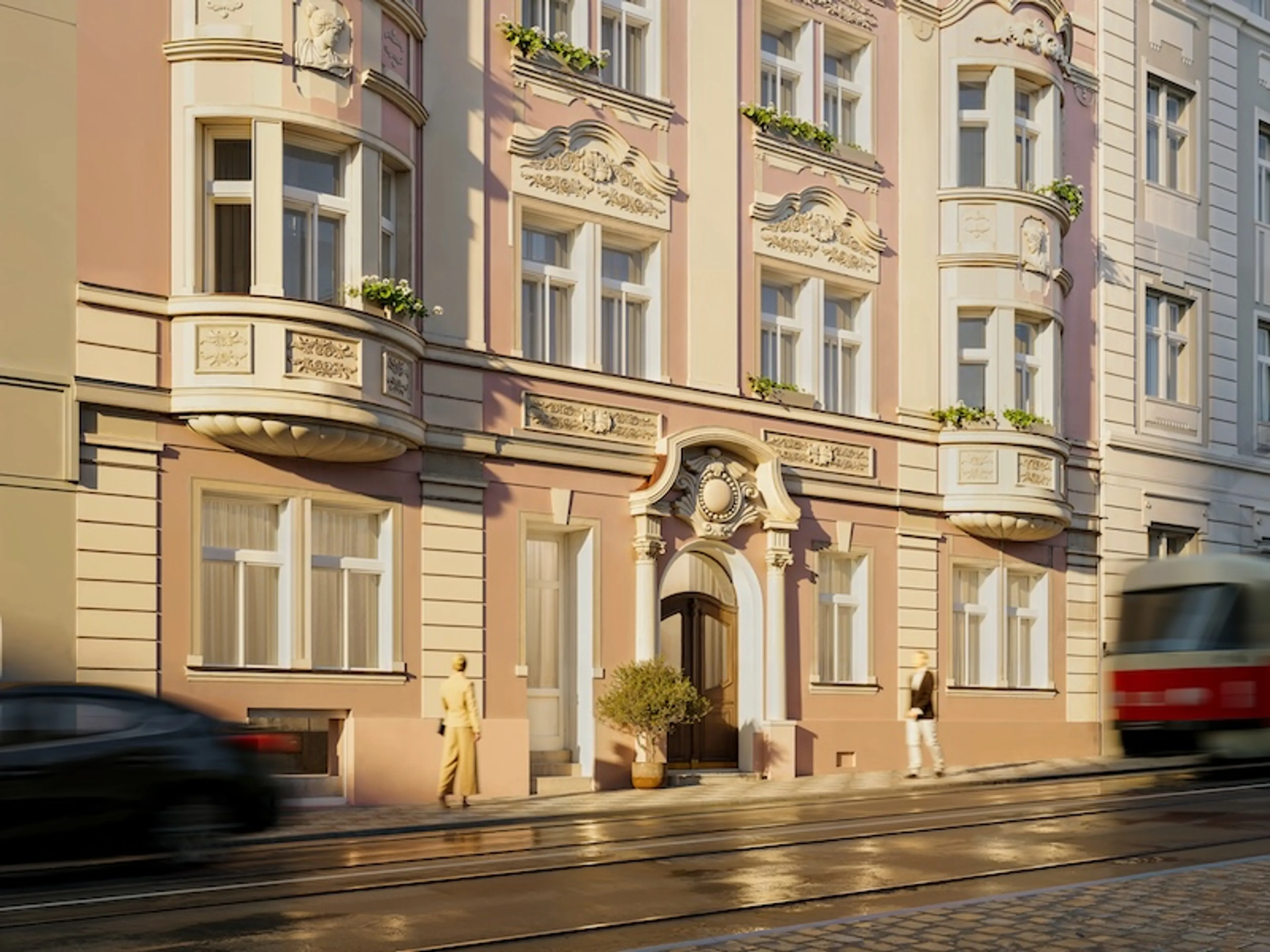
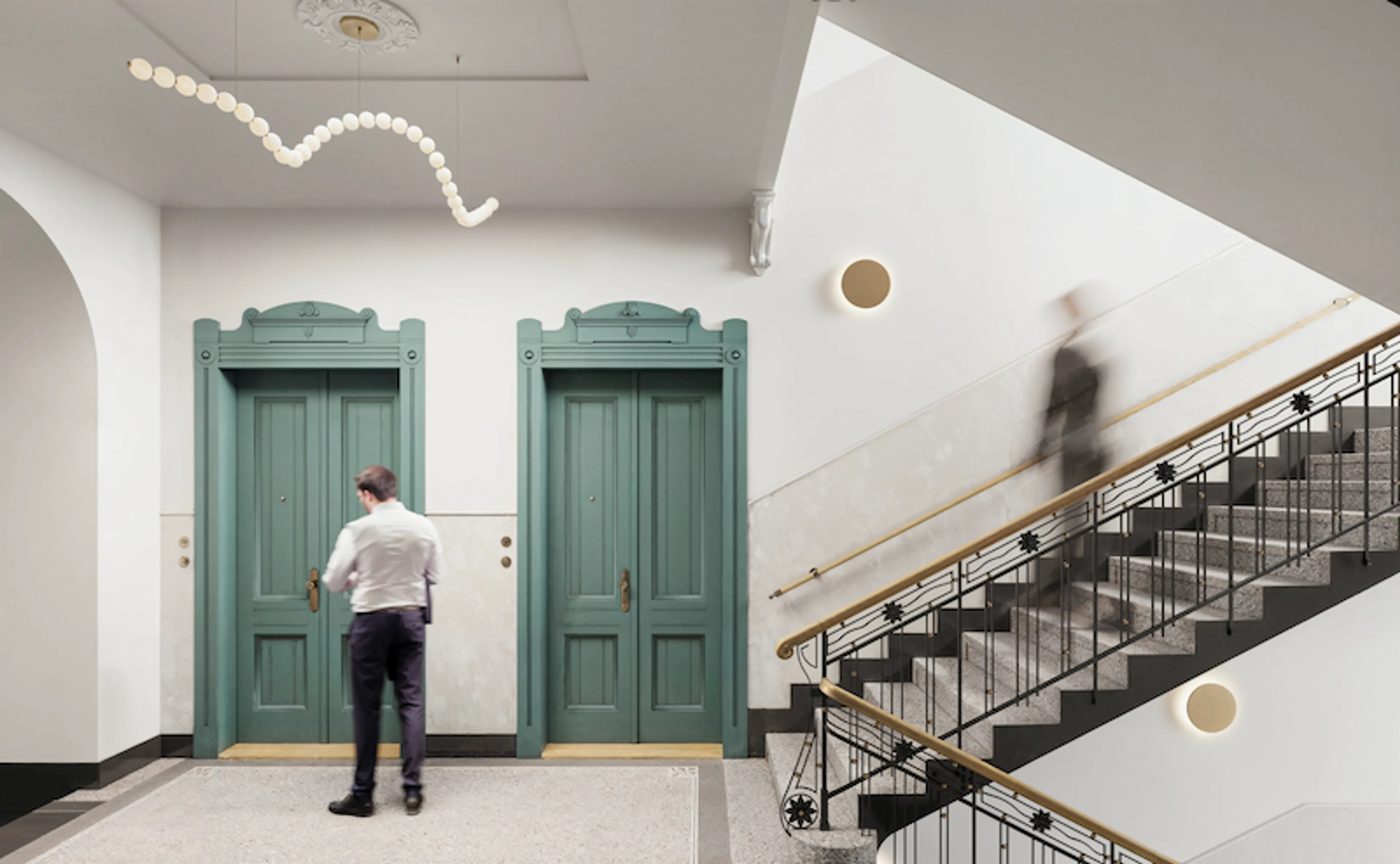
When designing, we respect the architectural value of the building and complement it with modern elements that bring a fresh contrast. We perceive the façade, interior, and common areas as one whole. We connect the colour palette so that it flows from the exterior into the interior. Inside, we strive to preserve original elements or replace them with high-quality replicas – for example doorbells, apartment signage, door handles, or hardware. In contrast, for lighting or mailboxes, we sometimes choose modern design that intentionally creates a contemporary counterpoint.
How do you approach colour, materials, and light when renovating apartment buildings?
Everything must be in balance. Many apartment buildings lack natural light in common areas or courtyards. For this reason, we place strong emphasis on high-quality artificial lighting in corridors and staircases to brighten the space.
We choose colours so that they do not make the interior feel darker. In most renovations, we follow the original colour and material palette. We often also connect the colour scheme of the façade with the interior so that the whole building feels harmonious and cohesive.
Which aesthetic styles or inspirations influence you when designing renovations?
We are always influenced by the architectural style of the building – its history, proportions, and original decoration. Many buildings also have their own specific stories, and in the past, different types of crafts or manufacturing were located in them, which can inspire us.
For example, in the renovated building on Bělehradská, the basement once housed a workshop producing automatic weighing scales. The spaces with their high vaulted ceilings and large skylights opening into the courtyard remain inspiring today for their atmosphere and architectural quality.
At the same time, we draw from contemporary architecture, which is part of both our work and our daily lives. For us, renovating apartment buildings means finding a balance between history and the present. As an architect, I always feel great joy when I pass through Prague and see a beautifully renovated building that we designed at JKH Atelier.
Other news
Other newsDo you have a question?
Write to us – we’ll get back to you as soon as possible.